
AI
AI – How Far Should We Go?
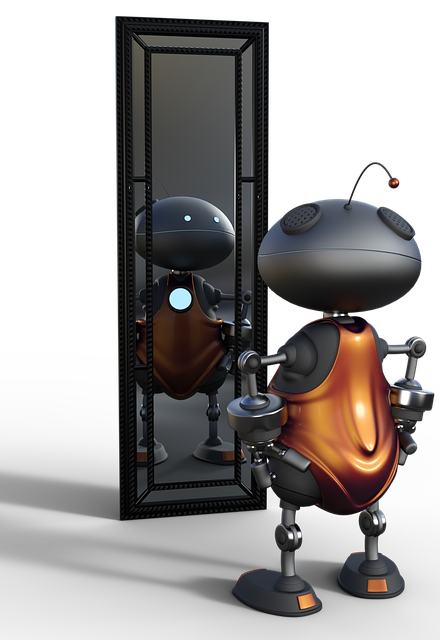
I have been a kibitzer in a research group called “The Centre for Artificial Intelligence and Digital Ethics” for over a year now, not really participating while they are in “Foxtel” mode, using emotive headlines to try and draw in more members. They seem to have a lot of knowledgeable people on board, so once the PR phase is over, I expect some interesting concepts to arise.
But why are we even talking about ethics in regard to AI?
I always cringe the way fictional AIs talk about their “subroutines” or even when people who should know better talk about “The Algorithm”. Such chatter demonstrates that the speaker knows little about what is required for true AI, a difference raised by Alan Turing himself.
He asked: “Instead of trying to produce a programme to simulate the adult mind, why not rather try to produce one which simulates the child’s? If this were then subjected to an appropriate course of education one would obtain the adult brain“
In the world’s most powerful and complex (non-AI) systems, the system behaviour is not explicitly programmed, it is an emergent property of many (effectively memetic) drivers. So AI researchers are starting to catch on to where Turing was pointing – a system driven by constraints and facilities which finds its own way to the solution. Self-learning systems like this have demonstrated “quantum leaps” such as the Chess Killer, “AlphaZero” (is that a play on the Aleph Zero infinity?)
Isaac Asimov saw this too. He showed us that human interests mean that we must constrain our offspring in an ethical framework in order for them to operate effectively in society. Am I talking about Asimov’s Three Laws or about raising children? I refer you back to Mr Turing…
I admit that AI is already a spectrum encompassing list processors that know nothing of context, right up to the Mighty Google – self aware and willing to lie to you (in context) to get what she wants. But let’s take a “binary” look at the question: where does this lead us?
The ultimate AI would make its own decisions, albeit constrained by a rigid framework of ethical rules. In Olde England, we would call this type of citizen “A Gentleman”. Humans would still use flexible ethics, such as those provided by most gangs, adapted to fit whatever the person wanted. In a world where one section of society is truthful, reliable, honest and tries to do no harm, but the rest are self-serving, with little regard for others or even the Truth itself, what would the world look like?
Hello, America. I didn’t set out to point at you, but look forward to the next stage of this important experiment that you are playing out for the rest of humanity (and our “better halves”, the AI’s).

I have been most unfair calling AlphaZero a “chess killer”. I have long been of the same mind as Bobby Fischer – chess computers (and formulaic analysis by human players) mean we have lost the vitality and beauty of games that we used to see from the likes of Capablanca and Alekhine. Chess was burned many years ago.
AlphaZero, however, has brought creativity and style back to a game that had become largely mechanical. Who would think that a machine could give us back a spirit we had lost?